Our Methodology
Complex systems rarely fail in isolation: undocumented assumptions, legacy artefacts, rapid delivery pressures, and fragmented ownership introduce both technical and comprehension debt The accumulated cost of systems that “work” but are poorly understood (undocumented, fragile, vibe-coded or opaque), creating risk and slowing future change. . Understanding the real structure beneath that complexity is often the hardest part of the problem.
Anante approaches engagements as progressive refinement: moving from uncertainty and noise toward clarity, structure, and controlled delivery.
Not every engagement follow the same path: some conclude with investigation and assessment, while others continue through architecture, proof-of-concept development, or full delivery.

Stage 1: Chaos
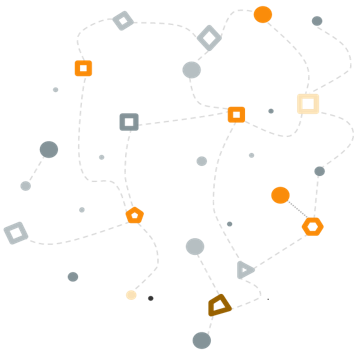
- Complex systems accumulate noise over time; the entropy The natural tendency of large systems to become chaotic as knowledge fades, documentation lags behind reality, and teams ship under-pressure fixes or local optimisations that make sense in the moment but fragment the whole. Furthermore, MVPs quietly become permanent, shadow systems emerge to bypass bottlenecks, and each change adds a little more complexity than it removes. is real.
- Legacy platforms, abandoned integrations, undocumented components, duplicated collateral, and fragmented ownership can obscure the true structure of a system.
- Important relationships become difficult to identify, while obsolete artefacts continue to create operational and cognitive overhead.
- At this stage, the objective is not immediate change, but recognition of the real environment and its constraints.

Stage 2: Investigate
- Investigation focuses on traversal and discovery: architectural pathways are explored, dependencies mapped, assumptions challenged, and undocumented behaviours identified.
- Existing systems, integrations, delivery processes, and operational realities are examined to establish where complexity genuinely exists.
- The investigation stage encompasses: ➤ technical debt assessment, ➤ architecture review, ➤ vendor evaluation, ➤ collateral gap analysis, ➤ exploration by proof-of-concept.
Stage 3: Comprehend
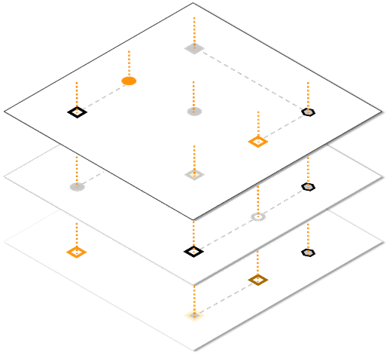
- Patterns begin to emerge: critical pathways, constraints, risks, and opportunities become clearer as systems are progressively understood.
- Areas of genuine complexity are separated from legacy noise, while undocumented or opaque components are brought into context.
- Comprehension is the restoration of structural clarity across systems, teams, and environments.
- For some projects, this stage concludes the engagement with strategic recommendation reports and/or remediation plans.
Stage 4: Architect
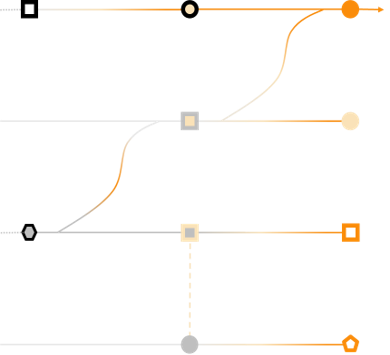
- Architecture introduces intentional structure: Once systems and constraints are properly understood, solutions can be designed with clarity.
- This may involve defining integration strategies, establishing architectural principles, designing migration pathways, assessing global impacts or shaping proofs-of-concepts and designing MVP platforms.
- The aim is to produce the requisite collateral to leave teams with enough structure, rationale, and documentation to proceed to build maintainable solutions.
Stage 5: Deliver
- Delivery focuses on practical transition: systems are introduced, adapted, uplifted, or implemented in ways that preserve continuity while enabling future change - maintainability is key.
- Some engagements conclude with strategic clarity; others extend into implementation support, proof-of-concept realisation, migration execution, or phased platform uplift.
- This stage often includes: ➤ implementation oversight, ➤ technical decision support, ➤ migration planning and execution, ➤ delivery governance, ➤ phased platform evolution.